


In the rapidly evolving economic landscape of India, Small and Medium Enterprises (SMEs) and MSMEs are facing a pivotal crossroad in financial management. Traditionally, the role of a Chief Financial Officer (CFO) was reserved for large corporations with massive turnovers and complex global footprints. However, as the Indian startup ecosystem matures, the need for high-level strategic financial guidance has become a necessity rather than a luxury. This has given rise to a significant debate: should a growing business invest in a full-time, in-house CFO, or leverage the flexibility of virtual CFO services in India?
For many entrepreneurs, the title “CFO” carries the weight of high salary expectations and corner-office overheads. Yet, the functions they perform—capital structuring, cash flow optimization, and strategic tax planning—are exactly what a small business needs to scale. Virtual CFO for small business MSME sectors offers a bridge between having no financial leadership and the heavy financial burden of a permanent executive. At Consultara Global Private Limited, we see businesses struggling to balance the need for sophisticated financial control with the reality of limited budgets.
Choosing between an in-house hire and outsourced financial management services isn’t just a matter of cost; it’s a strategic decision that impacts the agility, control, and long-term outcomes of your organization. While an in-house CFO provides 24/7 physical presence, a virtual CFO brings a wealth of cross-industry experience and a technological edge that is often hard to find in a single individual. This blog explores the critical differences between these two models, focusing on how your choice will dictate your company’s financial health and operational efficiency in a competitive market.
The Cost Implication: Salary vs. Service Fee
The most immediate differentiator between a virtual and an in-house CFO is the financial commitment required. Hiring an experienced in-house CFO in India is an expensive endeavour. Beyond the base salary—which for a seasoned professional can reach seven figures—companies must account for recruitment fees, bonuses, health insurance, paid leaves, and employer-side provident fund contributions. For an MSME, this “fixed cost” can severely strain cash flow, especially during lean periods.
In contrast, virtual CFO services in India operate on a “pay-as-you-go” or retainer model. This transforms a heavy fixed cost into a manageable variable expense. Because you are essentially sharing the CFO’s time with other clients, you gain access to top-tier financial expertise at a fraction of the cost of a full-time hire. This model is particularly beneficial for startups that need “Series A” level financial strategy but only have a “Seed” level budget. By outsourcing, you eliminate the overheads of office space and specialized software subscriptions, as the service provider usually comes equipped with their own tech stack.
Furthermore, the “opportunity cost” of a bad hire in an in-house position is astronomical. If an in-house CFO doesn’t work out, the severance and re-hiring process is both costly and time-consuming. With a virtual CFO from a firm like Consultara, the risk is mitigated; you have a team of experts ensuring continuity, and the service can be scaled up or down based on your business cycles, providing a level of financial elasticity that an in-house contract simply cannot match.
Depth of Control and Physical Presence
One of the primary arguments for an in-house CFO is the perceived level of control. Business owners often feel that having a leader physically present in the office ensures better oversight and immediate response times. An in-house CFO is deeply embedded in the company culture, attends every meeting, and is available for spontaneous “water cooler” strategy sessions. This physical proximity can foster a sense of security for traditional business owners who value hands-on management.
However, the concept of “control” is evolving. In the digital age, a virtual CFO for small business MSME provides control through data and transparency rather than physical presence. Virtual CFOs utilize cloud-based accounting and real-time dashboards to provide insights that are often more accurate than manual reports generated in-house. While they may not sit in your office daily, their “control” is exercised through rigorous financial systems, automated workflows, and scheduled strategic reviews.
The trade-off is between “physical availability” and “objective oversight.” An in-house CFO might become too involved in day-to-day office politics or “groupthink,” potentially clouding their financial judgment. A virtual CFO, being an external partner, maintains an objective, bird’s-eye view of your finances. They are not influenced by internal biases and can provide the “hard truths” that are necessary for survival and growth. At Consultara, we ensure that while our presence is virtual, our impact on your internal controls and governance is tangible and robust.
Experience: Niche Focus vs. Cross-Industry Insights
An in-house CFO usually brings deep experience in a specific niche. If you hire someone from the manufacturing sector, they will have an intimate understanding of supply chains and factory overheads. This specialization is valuable for maintaining the status quo. However, their perspective is limited to what they have seen within the four walls of their previous employers. In a rapidly changing economy, a narrow focus can sometimes lead to stagnation or missed opportunities for innovation.
When you opt for outsourced financial management services, you aren’t just hiring an individual; you are hiring a collective brain trust. Virtual CFOs work with a diverse portfolio of clients across various sectors—tech, retail, healthcare, and manufacturing. This cross-pollination of ideas is a massive advantage. For example, a virtual CFO might apply a lean inventory management technique from a retail client to a manufacturing MSME, or bring SaaS-based subscription billing insights to a traditional service business.
This breadth of experience is particularly vital for MSMEs looking to pivot or expand. Whether it’s navigating GST complexities, exploring international export incentives, or preparing for a private equity pitch, a virtual CFO has likely “been there and done that” multiple times in the last year alone. This collective intelligence allows them to anticipate market trends and regulatory changes faster than a single in-house professional might, ensuring your business remains compliant and ahead of the curve.
Scalability and Flexibility for Growth
The financial needs of an MSME are rarely linear. There are months of intense activity—such as during an audit, a fundraising round, or a merger—and months where the financial requirements are strictly operational. An in-house CFO is a static resource; you pay for their full-time presence regardless of whether the workload justifies it. During high-intensity periods, a single CFO might become overwhelmed, leading to errors or delays in critical decision-making.
Virtual CFO services in India are built for scalability. During a quiet quarter, you might only require high-level treasury management and compliance checks. However, if you decide to acquire a competitor or launch a new product line, a virtual CFO firm can immediately deploy additional resources or specialized experts to handle the increased workload. This “elastic” nature of service ensures that you never pay for more than you need, but you always have access to the resources required for a “big move.”
This flexibility also extends to the skillset. A small business might initially need a CFO focused on basic bookkeeping and tax compliance. As it grows, it will need someone skilled in investor relations and complex financial modelling. Transitioning between these phases with an in-house hire involves difficult terminations and expensive new searches. With Consultara Global Private Limited, the service evolves with you. We adapt our strategy and the level of our involvement as your business moves through different stages of its lifecycle, ensuring a seamless transition from a small startup to a mid-market leader.
Technology and Financial Modernization
The modern financial landscape is driven by FinTech. From automated invoice processing to AI-driven cash flow forecasting, the tools available today can significantly reduce human error and provide predictive insights. An in-house CFO may or may not be tech-savvy; often, they are accustomed to the legacy systems they have used for decades. Implementing new technology in-house often requires a separate budget for consultants and software licenses, which many MSMEs hesitate to approve.
A virtual CFO for small business MSME is typically a digital native. Because they manage multiple clients, they utilize the most efficient, cutting-edge financial software to maintain accuracy and speed. When you hire a virtual CFO, you are often “inheriting” their sophisticated tech stack. They can help you migrate from manual spreadsheets to cloud-based platforms like Zoho Books, Tally Prime on Cloud, or specialized ERPs. This modernization happens faster and more effectively because the virtual CFO has already implemented these systems for dozens of other clients.
Digital transformation is no longer optional. A business that relies on month-old data to make today’s decisions will always be at a disadvantage. Virtual CFOs emphasize real-time reporting. By integrating your bank accounts, sales platforms, and payroll systems, they provide a live view of your financial health. This level of technological integration ensures that your “outsourced” financial department is actually more connected and responsive than many traditional in-house departments.
Strategic Outcomes and Decision Support
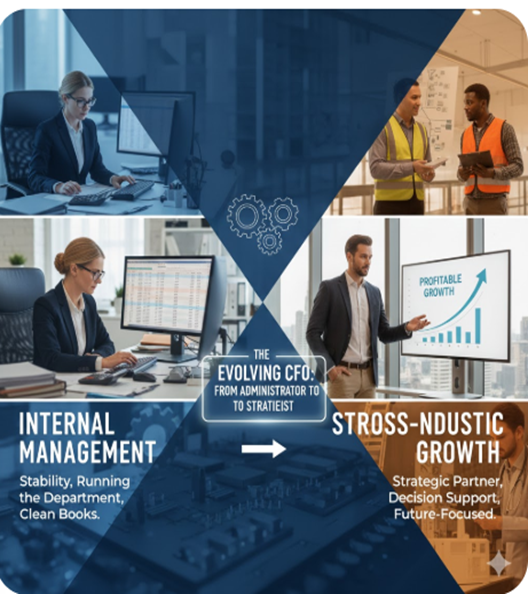
Ultimately, the value of a CFO is measured by the quality of the decisions they enable. An in-house CFO’s primary outcome is often stability and internal management. They are there to “run the department.” While this is important, for a growing MSME, the CFO must be more than an administrator; they must be a strategic partner to the CEO. The desired outcome is not just “clean books,” but “profitable growth.”
outsourced financial management services are inherently outcome-oriented. Because their contract depends on delivering value, virtual CFOs are highly focused on Key Performance Indicators (KPIs). They work backward from your business goals—whether that’s increasing EBITDA, reducing the debt-to-equity ratio, or preparing the company for an exit. Their reports are not just rows of numbers; they are strategic documents that highlight variances, identify “leakages” in the system, and suggest actionable steps to improve the bottom line.
For an MSME in India, where the regulatory environment is complex and the competition is fierce, having a virtual CFO means having a navigator. They provide the “Outcomes” that matter: successful debt syndication, optimized tax structures, and robust internal controls that prevent fraud. By choosing a virtual CFO from Consultara, you ensure that your financial strategy is proactive rather than reactive, turning your finance department from a “cost centre” into a “value driver.”
Conclusion: Making the Right Choice for Your Business
The debate between a Virtual CFO and an In-House CFO is not about which is “better,” but which is “right” for your current stage of growth. For large enterprises with thousands of employees, the dedicated, full-time focus of an in-house CFO is indispensable. However, for the vast majority of Indian MSMEs and growing startups, the virtual CFO services in India offer a superior ROI. They provide the perfect blend of high-level expertise, technological sophistication, and cost-efficiency.
By choosing a virtual CFO for small business MSME, you gain the freedom to focus on your core product and market expansion, while seasoned experts at Consultara Global Private Limited handle the complexities of your balance sheet. You get the control you need through transparent, real-time data and the outcomes you desire through strategic, cross-industry insights. In the journey of scaling a business, having the right financial partner is half the battle won. Evaluate your needs, consider the long-term scalability, and choose the model that empowers your business to reach its full potential.